

An inheritance in stone
Before there was a company to lead or a magazine to launch, there was a father’s work.
Peña remembers walking through his father Miguel A. Peña’s coral-stone quarries and natural-stone factory in the Dominican Republic. Alongside his visits to remarkable villas, these walks gave his story a starting point in the material itself. The stone that distinguished those homes also belonged to the daily work of his family.
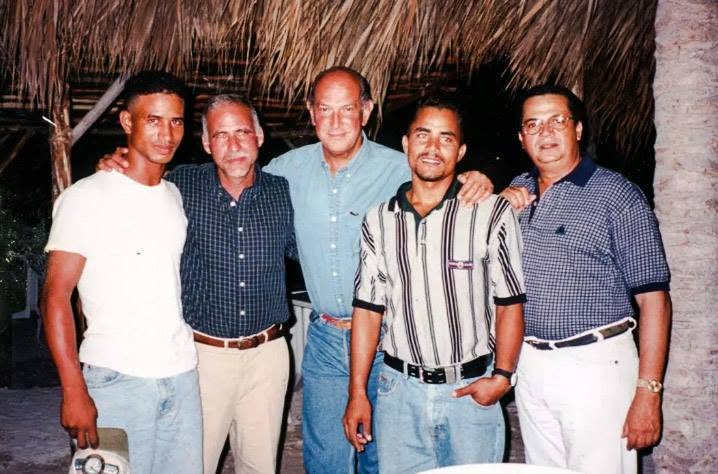
One photograph from the family archive brings that world into focus. Five men stand together beneath a thatched roof, arms resting across one another’s shoulders. Miguel H. Peña identifies Oscar de la Renta at the center, architect Ernesto Buch immediately to his left in the image, and his father, Miguel A. Peña, at the far right. The other two men, he explains, were workers who helped build the home. The photograph preserves the people behind a celebrated residence: a client, an architect, and members of the team whose work made it possible. [1].
Miguel H. Peña remembers the world of Dominican luxury through the buildings that surrounded his childhood: impressive villas, coastal estates, and the distinctive presence of piedra coralina. In his account, the work of his father, Miguel A. Peña, brought him close to a world in which architects, designers, suppliers, and craftspeople turned ambitious ideas into homes.
A magazine clipping preserved by the family gives that work a written acknowledgment. The Spanish-language article credits Miguel Peña with the residence’s stone and coral work and reports that de la Renta considered him “un verdadero artista”—“a true artist.” Miguel H. Peña identifies the craftsman as his father and the clipping as a Vogue article. [2].
The recognition names the person behind the material: the judgment required to make stone serve a design, the care that gives a finished surface its character, and the knowledge carried from one project to the next. For the younger Peña, those few words connect a celebrated Dominican designer’s world to something much more personal: his father’s working life.
The architectural setting is documented. Ernesto Buch’s portfolio identifies the Oscar de la Renta House at Corales de Punta Cana as a project completed in 1997. A profile of Buch’s work also describes the recurring use of Dominican coral stone across floors, wall surfaces, and columns in his Caribbean houses. These were buildings conceived around their setting, with shaded verandas and spaces responsive to the tropical climate. [3]; [4].
The clipping brings the architect and the craftsman into the same account, naming Buch in connection with the house and Peña for its stone and coral work. The younger Peña’s memories extend that history into a family story of palatial Caribbean residences, where a designer’s vision depended on the skill of the people executing it. To follow that work was to see how much knowledge could be contained in a single material—and how far that knowledge could travel.
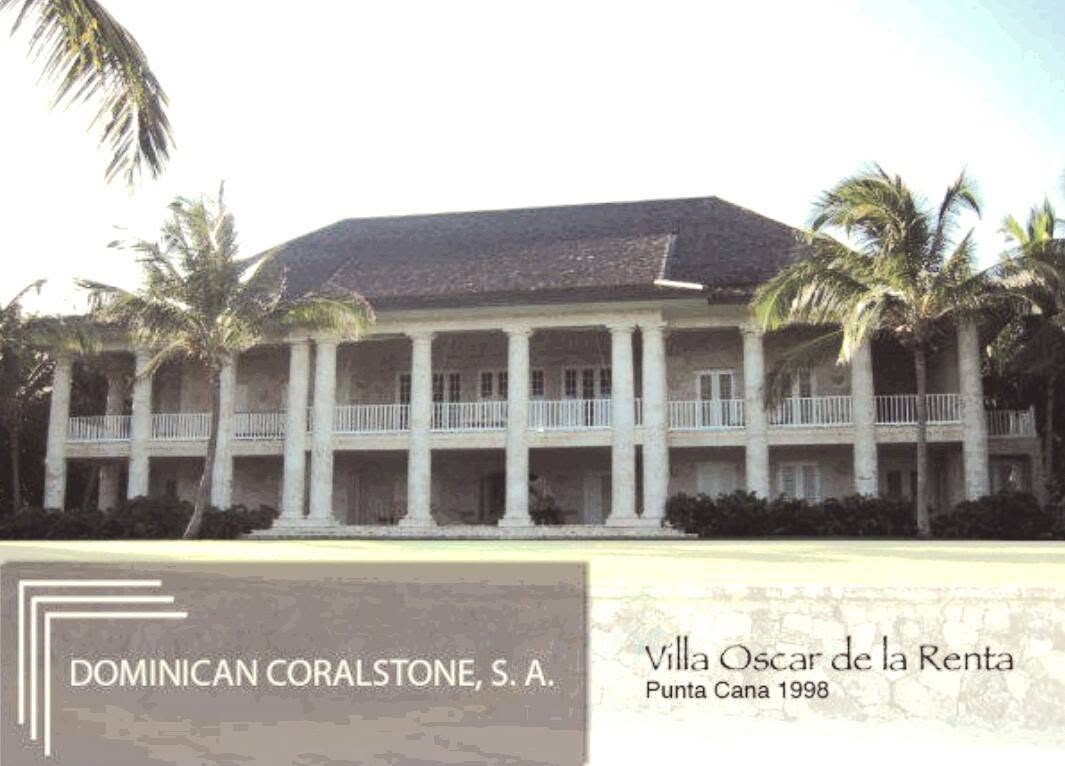
A second image in Peña’s archive presents the house itself: a long, columned façade framed by palms, carrying the name Dominican Coralstone, S.A. Its printed caption reads “Villa Oscar de la Renta — Punta Cana 1998.” The company name and the finished residence appear together, preserving a tangible connection between the family’s materials business and the architecture that inspired the next generation.
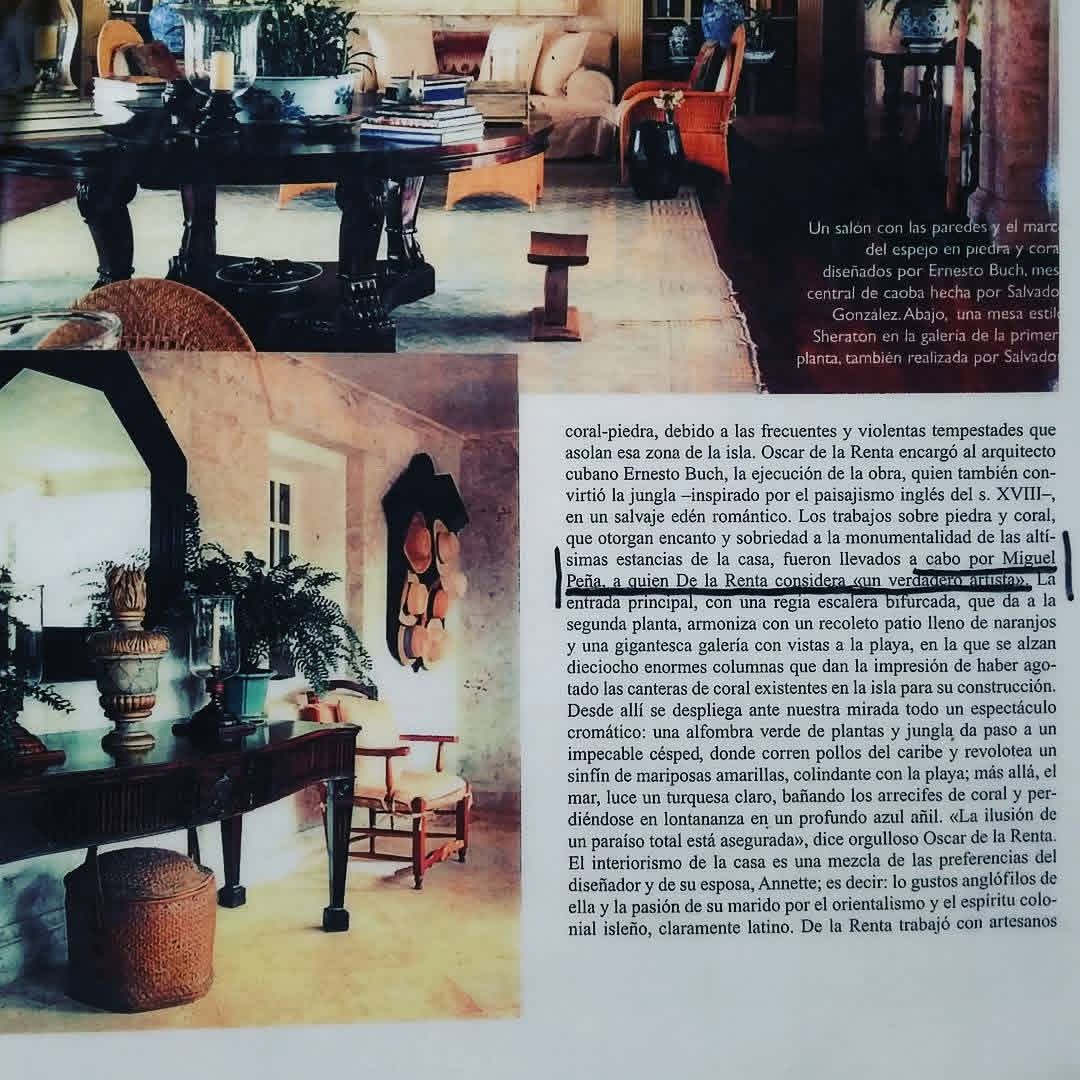
“Un verdadero artista.”De la Renta’s description of Miguel Peña, as reported in the family-supplied magazine clipping identified by his son as Vogue.
Magazine page supplied by Miguel H. Peña. Edition, date, byline, page number, and photographers are not visible.From the archive: the published acknowledgment
The supplied page names Miguel Peña in its account of the stone and coral work and reports de la Renta’s description: «un verdadero artista». Miguel H. Peña identifies the publication as Vogue and the craftsman as his father. Edition, date, byline, and page number are not visible.
Celeste Cordero: faith and a mother’s guidance
Alongside the buildings that shaped Miguel’s eye was a mother who helped shape his character.
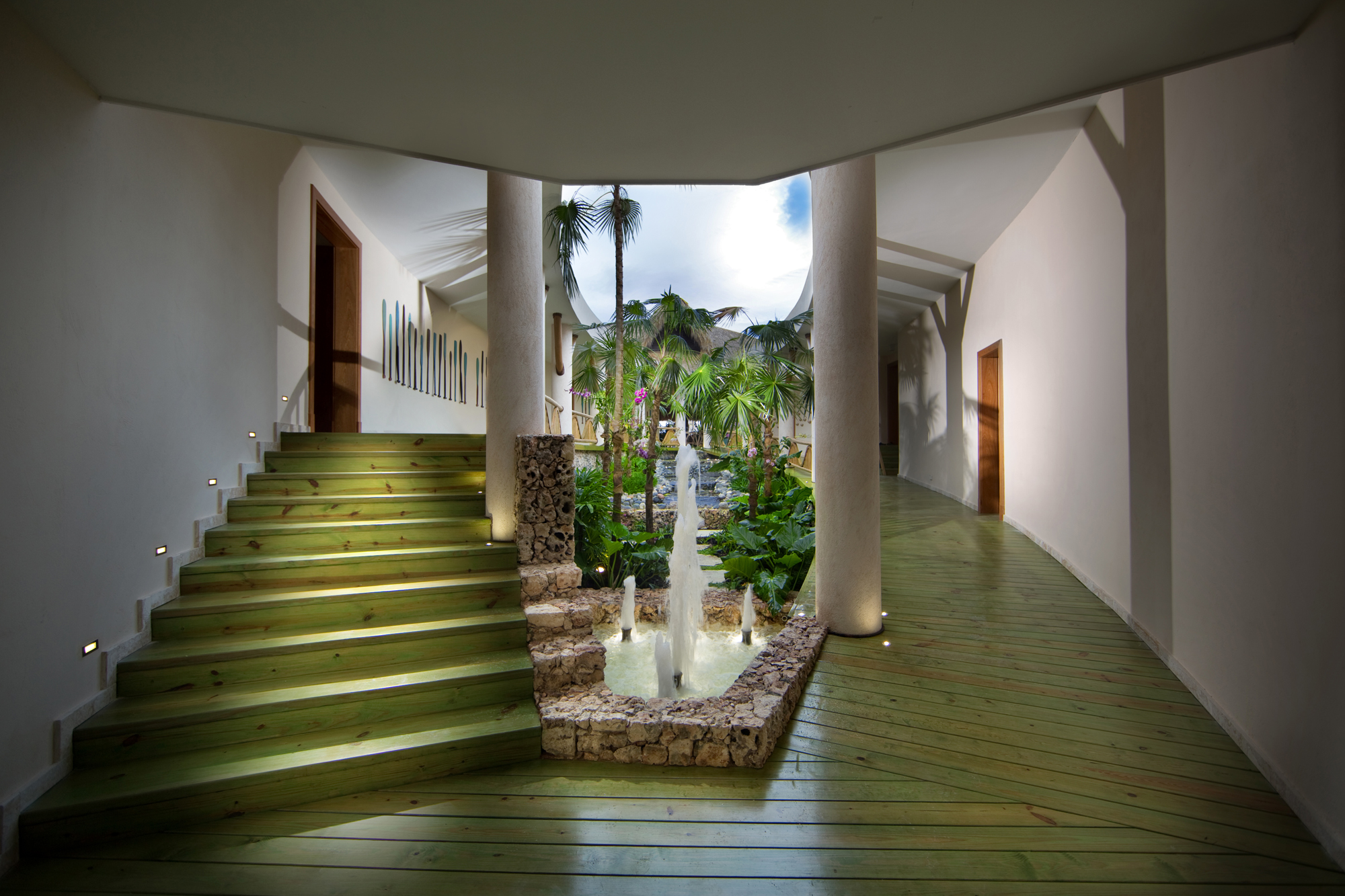
Celeste Cordero, his mother, holds a central place in his account of the man he has become. Peña credits her with instilling dedication, respect for others, and the conviction that a life should be guided by principles. Her devotion to God gave those lessons a spiritual foundation and offered him a source of strength as he found his own direction.
Her influence, as he describes it, has been both moral and deeply personal. She encouraged him to see his ambitions through the values she taught him, while standing beside him as those ambitions developed into decisions. Across the different chapters of his life, her support has remained constant. It continues today.
That constancy belongs in the story of his work. The magazine, the materials businesses, and the move into construction trace a professional journey; Celeste’s guidance speaks to the person making that journey. In the legacy Miguel carries forward, his father’s craftsmanship stands alongside his mother’s faith and example. Together, they give his idea of building a human foundation: dedication to the work, respect for the people involved, and principles to guide what comes next.
A childhood among remarkable houses
Peña also identifies residences for Julio Iglesias and Mikhail Baryshnikov among the Dominican homes his father and the team helped build. In his telling, these projects formed part of a working world in which distinguished private homes brought designers, material specialists, and construction crews into close collaboration.
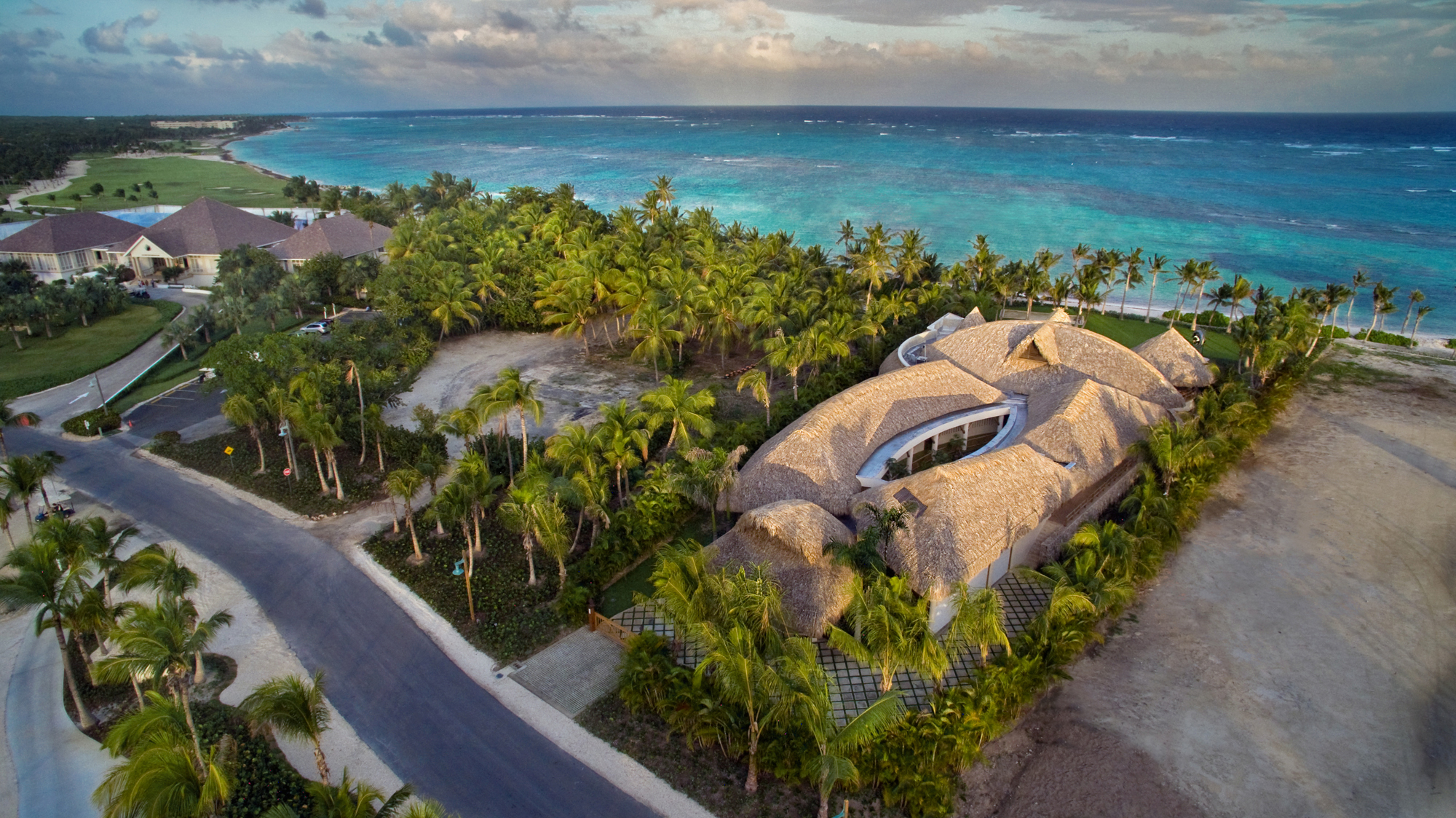
A 2018 Town & Country interview independently connects these homeowners: Baryshnikov described how de la Renta and Iglesias drew him to Punta Cana, and how de la Renta introduced him to Ernesto Buch, who designed his home with Lisa Rinehart. [6].
The villa of Theodore “Ted” Kheel also belongs to the project history Peña recounts. A founding partner of Grupo Puntacana, Kheel helped develop the destination alongside Frank Rainieri. Their partnership became an enterprise carried forward by the Kheel and Rainieri families. Within Peña’s story, the villa adds another connection between the work behind a private residence and the people who shaped Punta Cana itself. [7]; [8].
Among the properties Peña remembers walking through is La Serenísima at Casa de Campo, a residence originally commissioned by Henry Kravis and later acquired by Gustavo Cisneros in 1999. It belongs to the architectural landscape that helped form his interest in exceptional homes. [9].
For Peña, the importance of those visits lies in the impression they left. He describes growing up around extraordinary houses along the Dominican coast and discovering an interest that would eventually become a vocation. The homes offered a view into the possibilities of residential design: architecture, materials, landscape, and the way people live brought together in one place.
His father’s work gave that experience a practical dimension. In this family story, luxury was connected to work from the beginning. A finished villa could inspire admiration, while the business behind it introduced another set of questions: where materials came from, how they were supplied, and how the right people came together to complete a project.
That combination—an appreciation of the finished home and an interest in its making—runs through the career Peña would build.
Giving Caribbean living a voice
Peña traces the inspiration for Dominican Luxury Villas to those early experiences. He says he launched the magazine to present the lifestyle surrounding high-end Caribbean homes: the architecture that distinguished them and the wider world of living they made possible.
The magazine’s own Nuestras publicaciones page, preserved in a July 18, 2012 Wayback Machine capture, puts a body of work beside that ambition. The replayed page displays twelve covers and links labeled through Edition 14. Cover subjects range from luxury real estate and kitchens to furniture, golf, and marinas, alongside destinations including Cap Cana, Playa Nueva Romana, Cayo Levantado, and Balcones del Atlántico. [10].
Spanish and English cover lines suggest an audience extending beyond the Dominican Republic. Together, the covers show the breadth of the magazine’s outlook: the design of a room, the appeal of a property, and the leisure and landscape surrounding it. Publishing gave Peña a way to bring those interests together and share the residential world that had inspired him.
By October 2011, El Día was reporting on a golf tournament organized to mark Dominican Luxury Villas’ fifth anniversary, scheduled at La Estancia in La Romana. The anniversary points to origins around 2006; the archived cover collection adds a direct record from the publication’s own website. The event announcement also captures the publication’s wider ambition: a magazine participating in the social life associated with its subject. [11].
Peña was interested in the experience a property could offer, alongside the work required to create it. The magazine gave that interest a public expression. It is a useful perspective for a builder to carry: the finished room matters to the person who will live in it long after the construction team has left.
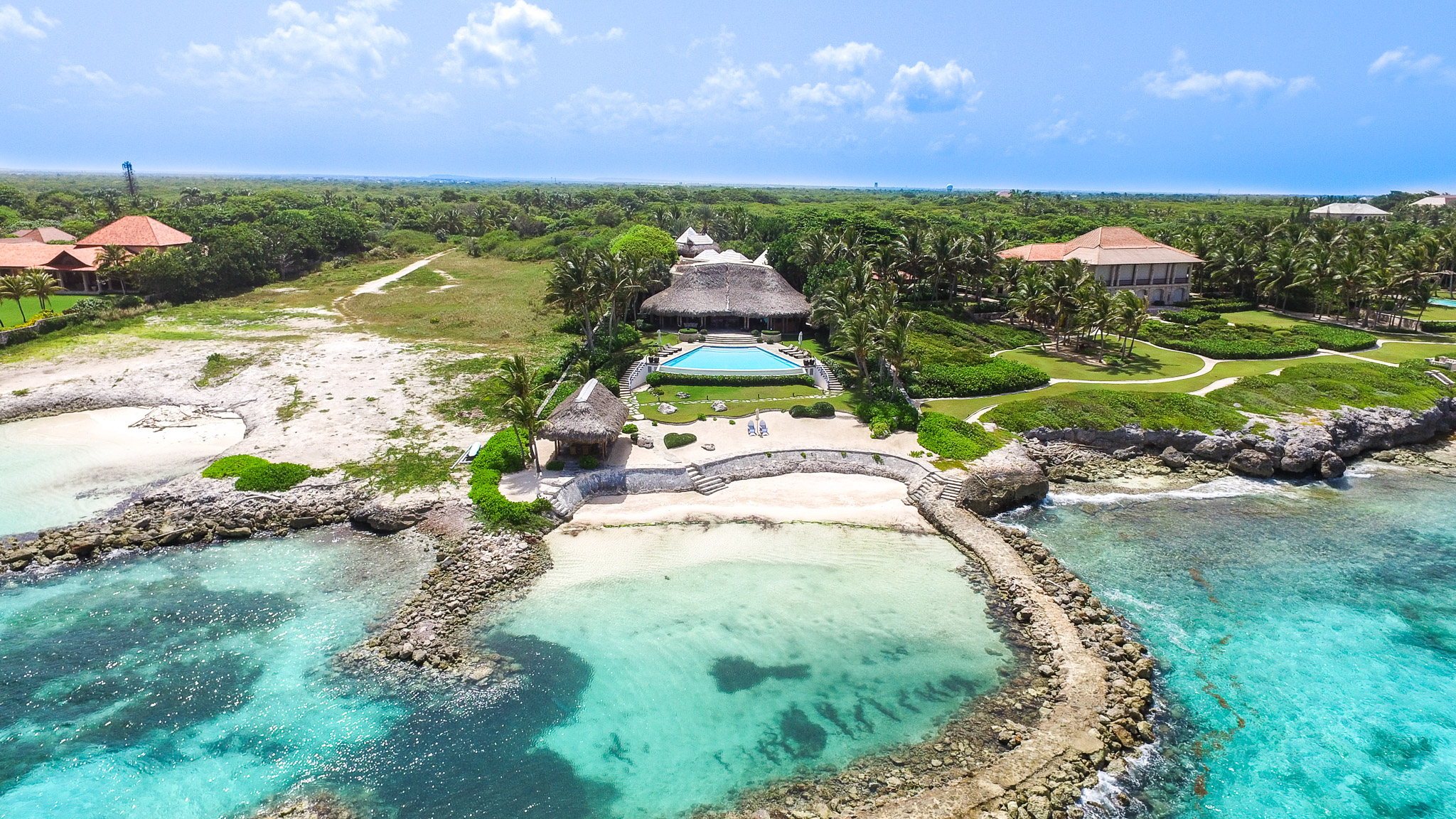
The business behind the beauty
Alongside his interest in publishing was a career in the materials business. Peña’s professional profile lists ownership roles with Dominican Coralstone, S.A. and, later, Coral Pavers, Inc. in the Myrtle Beach area. He describes supplying construction materials and working alongside high-end designers as part of his path toward general contracting. [12].
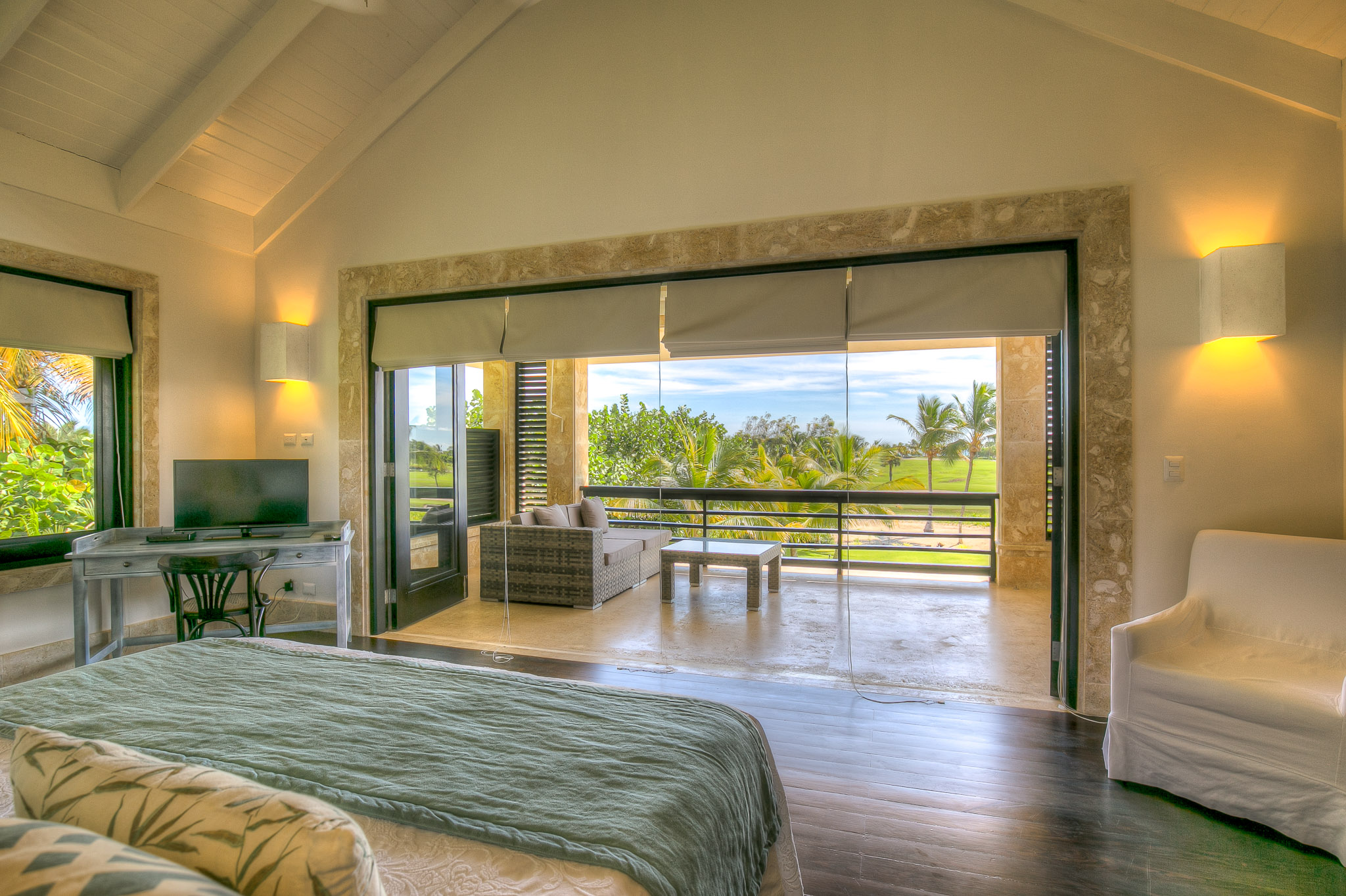
The factory eventually became a place of work for Peña himself. In the professional histories he supplied for this profile, he recalls joining his father’s operation after high school, cutting dimensional coral-stone tiles for floors and wall cladding. His account extends beyond the Dominican Republic to villa projects in the Bahamas and Jamaica, with visits and supervision alongside his father. The early fascination with a finished house was becoming a practical knowledge of how its materials were made and installed. [18]
That education continued on construction sites. His résumés name Hardee Construction and Prestige Aggregates alongside Dominican Coralstone, and describe work in framing, drywall, flooring, painting, and cabinetry, as well as operating skid-steer equipment in aggregate operations. These are the experiences behind a builder’s ability to look at a finished surface and understand the labor beneath it. [18]
His formal studies added another dimension. Peña’s 2026 résumé records studies in International Business at the University of Belgrano in Buenos Aires, alongside two years of industrial-engineering coursework. Both résumés also record training in AutoCAD, project management, and Gantt scheduling, and fluency in English and Spanish. In his professional story, business, technical study, and communication sit alongside the knowledge gained on site. [18]
The progression connects several sides of the same industry. A designer makes choices about the character of a space. A supplier has to translate those choices into a product that can be sourced and delivered. A contractor has to bring that product together with many others, in the right sequence, on a working site.
Peña’s background crosses those boundaries. It places the visible finish of a home beside the less visible responsibilities of sourcing materials, coordinating their delivery, and bringing them together on a construction site.
Seen together, these experiences give the builder behind the brand a particular point of view. The finished house is the result of many connected decisions. Knowing more than one part of that process can change how the whole is understood.
A wider family story of materials
The family’s industrial history reaches beyond decorative stone into the development of Cemento PANAM. For Miguel H. Peña, this chapter carries a memory of participating alongside his father in the venture’s beginnings—a connection he points to in the company’s own documentary.
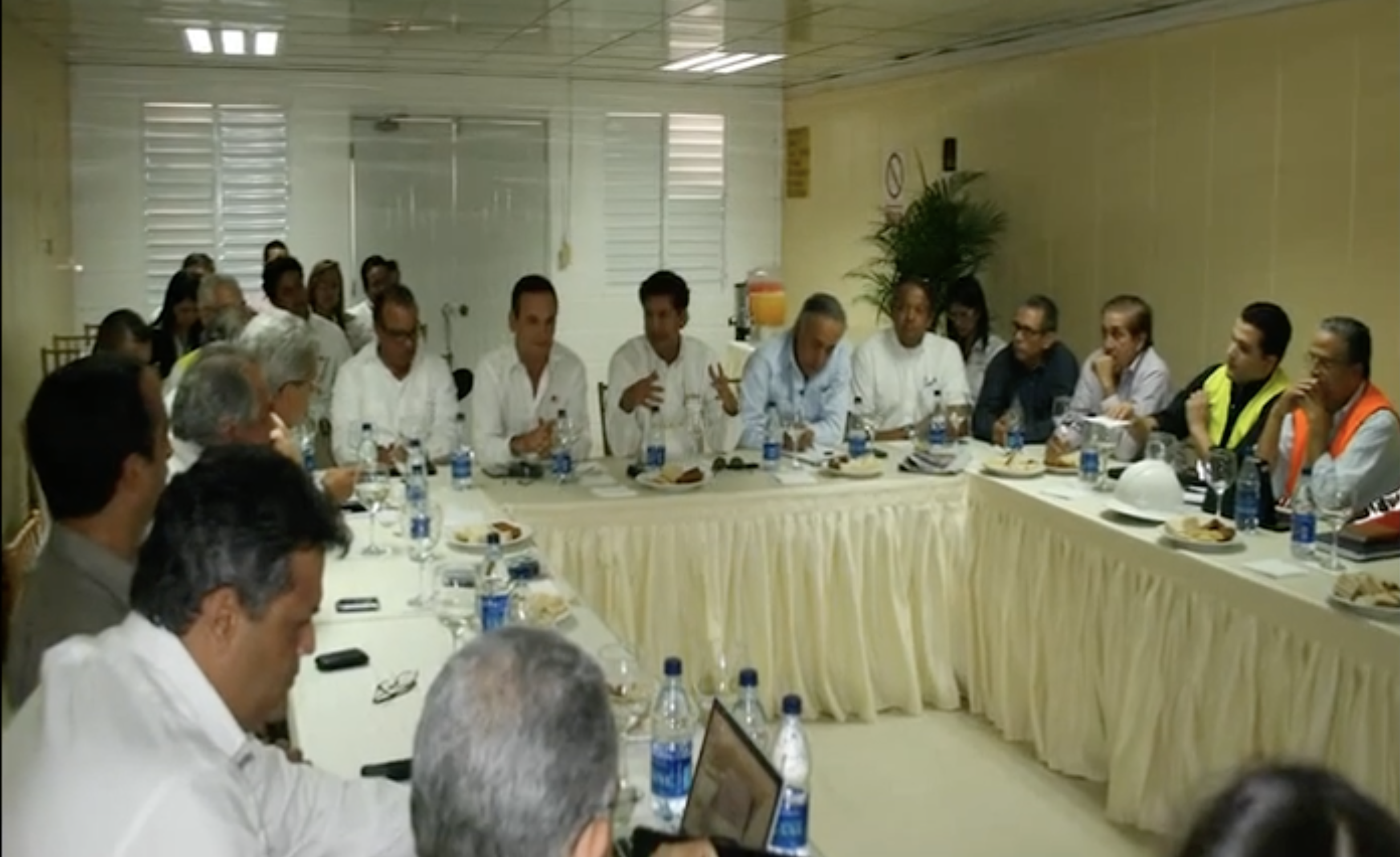
Published on October 14, 2013, DOCUMENTAL CEMENTO PANAM introduces the company as a venture backed by Dominican business interests and investors. In that account of its origins, the film includes a meeting photograph at approximately 0:41. Peña identifies himself and his father, Miguel A. Peña, among those present, and describes the occasion as a founding board meeting. The scene gives his family’s account a place within PANAM’s own visual history. [14].
His father’s published biography on the MinEnergy website credits Miguel A. Peña with founding Cementos Panamericanos, identified there as Cemento Panam. Together with the documentary and his son’s recollection, it connects the family’s experience in stone to a broader ambition in construction materials. [15].
Grupo ESTRELLA’s published history dates construction of the Villa Gautier plant to 2011 and the brand’s introduction to the Dominican market to 2013. The documentary belongs to that launch year, preserving a view of the people and industrial setting behind the business. [16].
For Peña, the significance is also personal: the experience of seeing his father’s work extend from the surfaces of exceptional homes to the industry that supplies construction on a larger scale. That family story embraces both the beauty of a finished residence and the production, planning, and collaboration that make building possible.
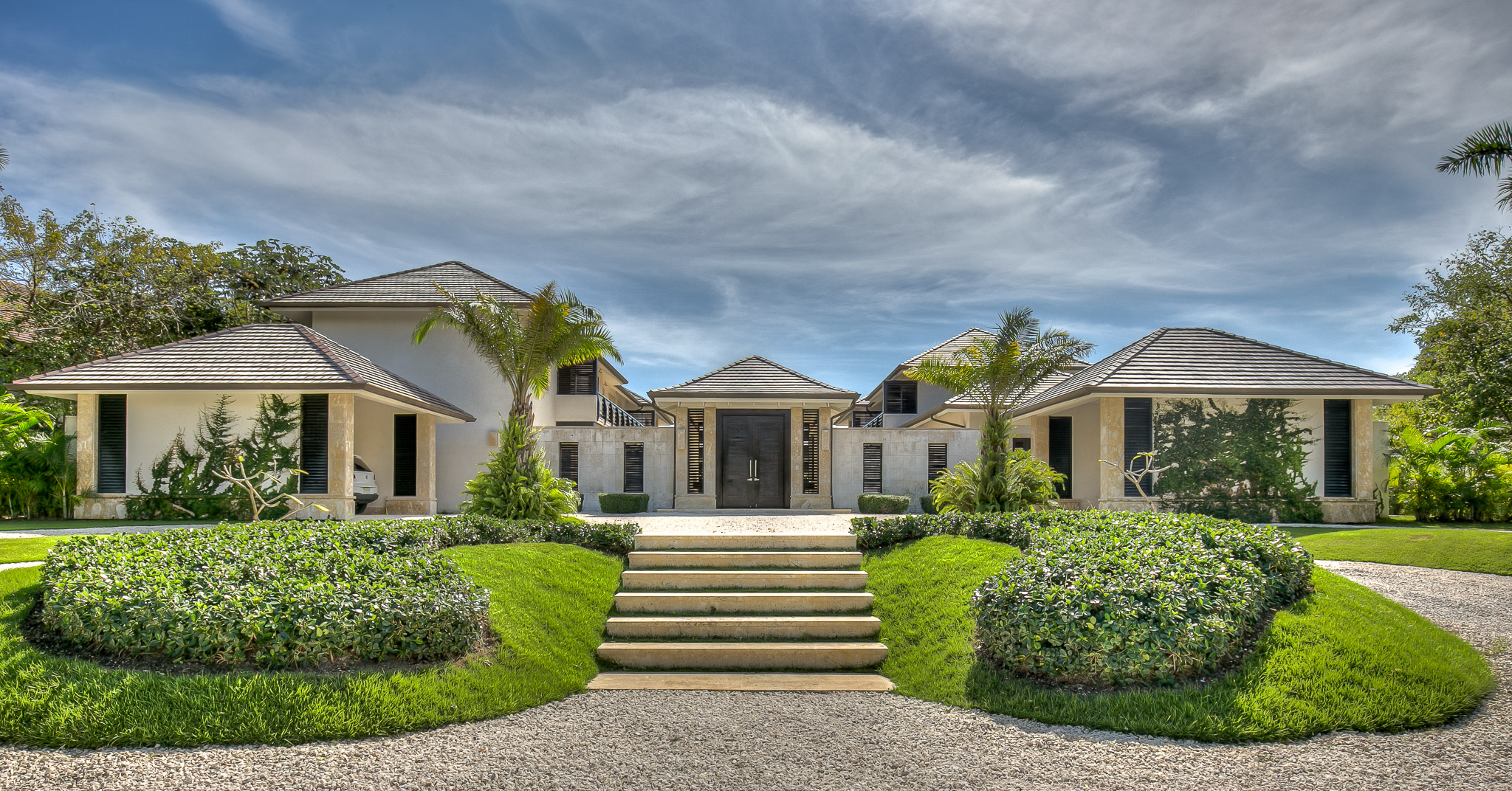
From Coralina to Carolina
Coralina—from piedra coralina, Spanish for coral stone—was part of the vocabulary of Peña’s early life. Carolina names the next chapter: building in the Carolinas, with the lessons of his father’s quarries, factory, and finished villas behind him.
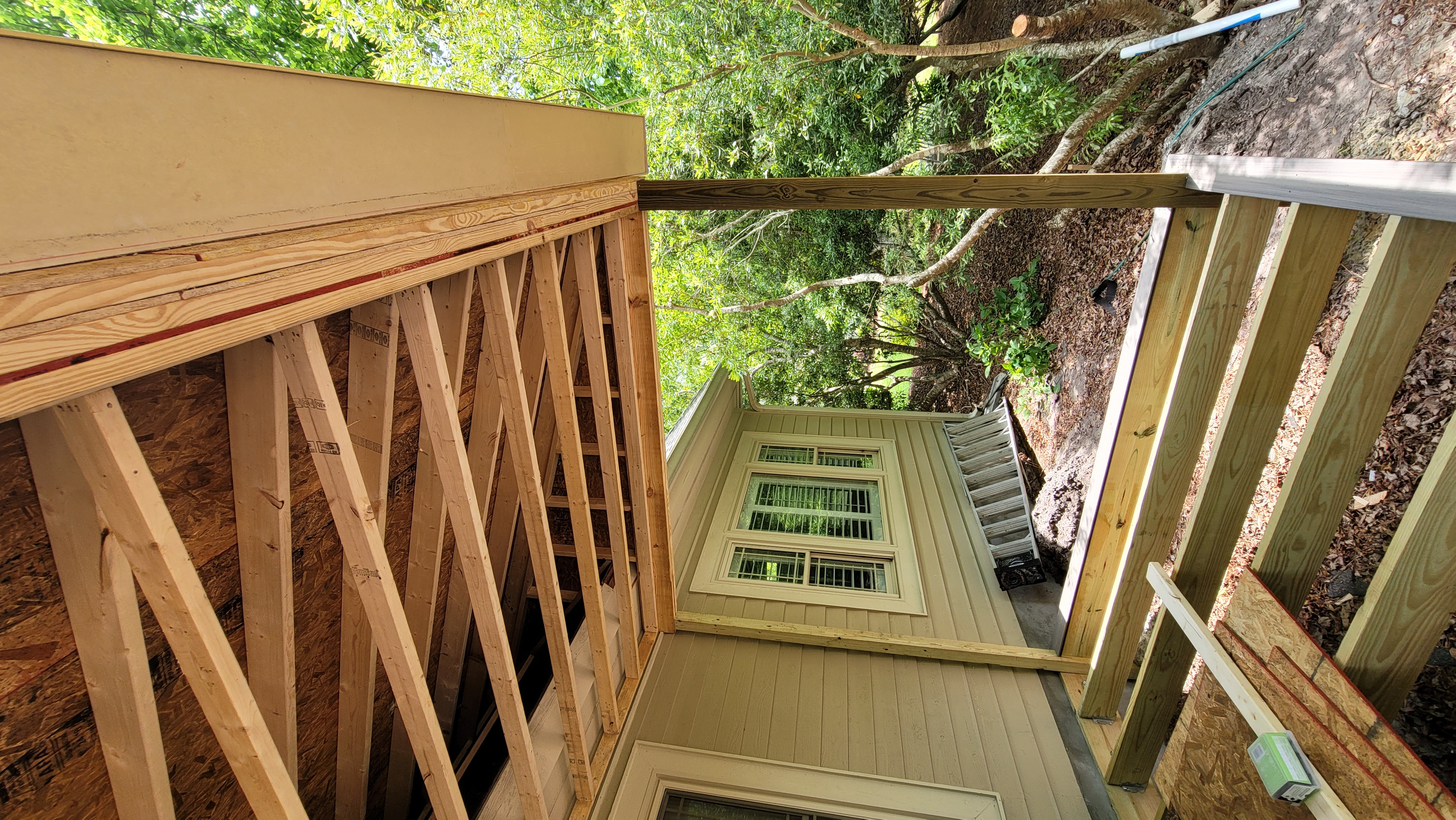
An important step came at Carolina Pro Exteriors, where his résumés place him from 2017 to 2019. Peña describes a role spanning sales, project management, and roofing and siding supervision. He helped establish the company’s branding and sales systems, then passed the NASCLA commercial contractor examination and served as its license qualifier—the person whose qualifications supported the company’s general-contractor licensing. In his account, that step helped the firm expand the work it could undertake. [18]
By 2020, M4 General Contractors was part of Myrtle Beach’s construction community. The city’s July 2020 business-license summary lists the company with Miguel Pena under general contracting. South Carolina’s current state record supplies a further milestone: the company’s general-contractor license was first issued on May 28, 2020. His LinkedIn history also records ownership of Coral Pavers beginning in September 2017, placing the materials business alongside this move into contracting. [12]; [17]. [20]
The early business required him to move between winning work and delivering it. His supplied résumés describe more than $1.2 million in estimates and a 68 percent conversion rate during the company’s pandemic-era startup period. These are Peña’s reported business results; they give a sense of the commercial responsibility accompanying the work on site. [18]
His project experience, as set out in the 2026 résumé, spans new homes, additions, commercial interiors, hotel remodeling, fire restoration, and floodplain rebuilding, along with roofing and sitework. The responsibilities run from estimates and permits through subcontractor and material procurement, staged project payments, inspections, and closeout. The résumé also describes scheduling systems and behavior-based safety programs developed during his earlier work at Carolina Pro Exteriors. [18]
The move into North Carolina has a documented licensing milestone of its own. M4GC Construction LLC’s Building license, L.103338, was first issued on May 21, 2024; the state board lists Peña as its active qualifier. At the time of this profile’s update, the North Carolina record showed an active license with an Intermediate limitation, while South Carolina listed M4 General Contractors LLC, license 122848, as active in the Building-BD4 classification. These records connect the two-state practice to the specific companies carrying out the work. [19] [20]
For clients, the process also depends on clear communication. His earlier résumé emphasizes helping homeowners understand what to expect before, during, and after construction. That concern connects the operational side of the business to a more personal responsibility: guiding someone through the making of a place they will inhabit. [18]
The transition is central to his story. Supplying an element of a home and overseeing its construction involve different scales of responsibility. General contracting requires decisions to come together across an entire project, from the people doing the work to the sequence in which it is completed.
The journey from quarry to completed home gives this chapter its meaning. Peña’s account begins with walks through his father’s places of work and visits to the villas that inspired him. Publishing offered a way to communicate the appeal of those homes; supplying materials brought him into the process of making them. Building in the Carolinas brings those experiences together around the project itself.
His 2026 professional history extends the story into development and building systems. It identifies NexGen Capital Partners as a real-estate investment and development venture; ModuSteel USA as an initiative focused on light-gauge steel framing and modular or panelized construction; and Southern View Homes as a residential development brand. The same account describes work with investor partnerships and homes built for rental communities. These interests carry his attention from the individual project toward how homes are planned, financed, and produced. [18]
What the name carries forward
There is a simple line on Peña’s LinkedIn profile: “Live. Learn. Create. Inspire.” It suits the range of the career he describes—a willingness to enter different businesses while carrying earlier experience into the next undertaking. [12].
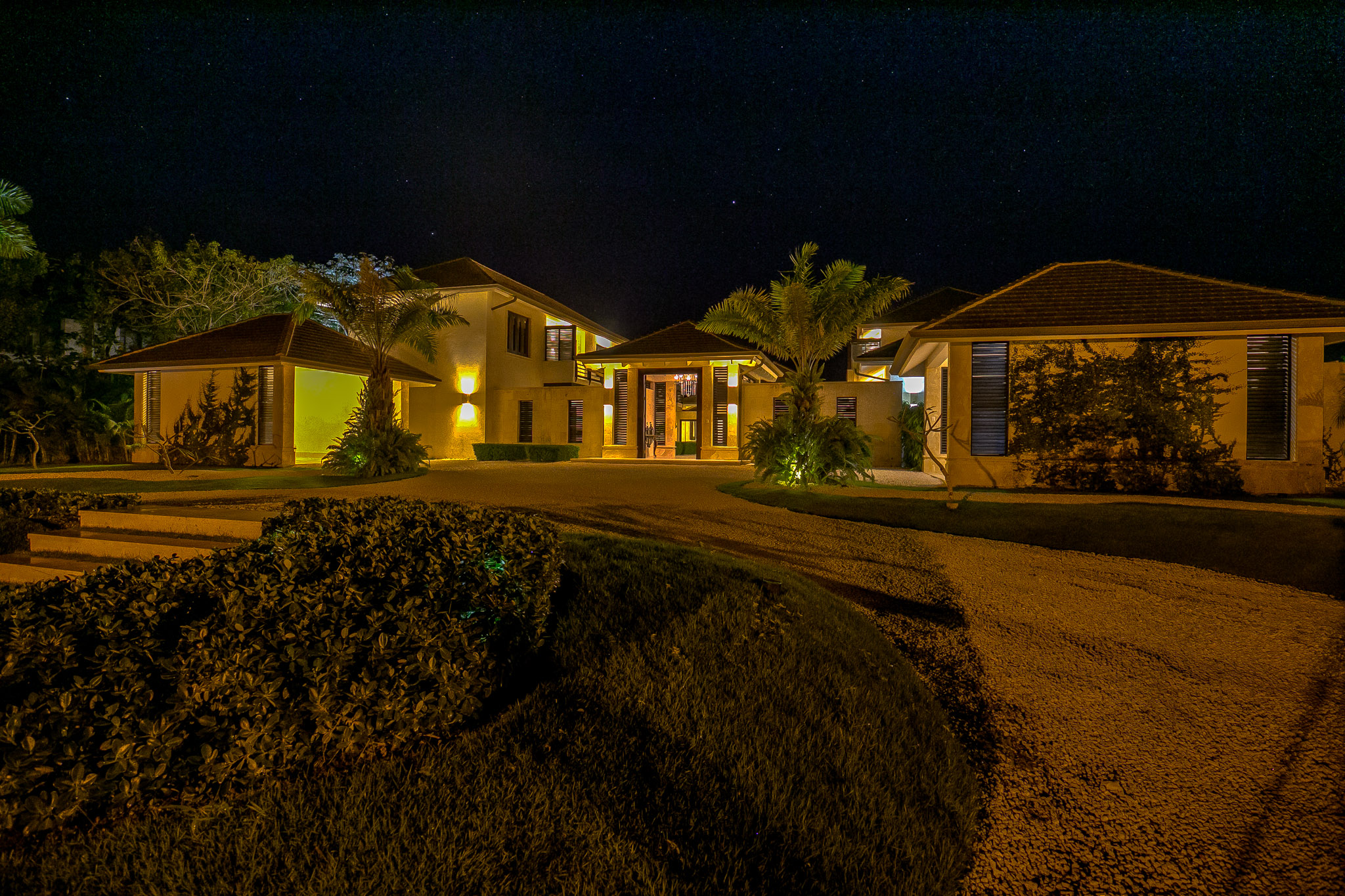
His connection to his parents gives that outlook its foundation. His father’s craftsmanship, recognized in a treasured magazine clipping, and his mother Celeste’s enduring guidance give the brand a history that precedes its name. One helped shape his appreciation of what could be built; the other helped shape the principles by which he would live and work.
Today, Peña describes the purpose behind his work in deeply personal terms: to create a lasting legacy for his family. His children, Miguel Andres and Mathias, are at the heart of that ambition. They give his efforts a horizon beyond the next project, connecting what he builds today with what he hopes to leave for the next generation.
His wife, Mayra Consuegra, holds an essential place in that story. Peña credits her with supporting him and helping him maintain balance as he pursues his ambitions. Her steady presence is part of the family life that gives the work its meaning, and part of the support that allows him to keep moving forward.
For Miguel H. Peña, the builder behind the brand, the legacy he inherited now shapes the one he hopes to create. His parents gave him examples of craftsmanship, faith, and principle. With Mayra beside him and Miguel Andres and Mathias at the center of his purpose, he carries those influences into a future he is working to build for his family.
About the photographs. This feature combines Miguel H. Peña’s supplied and Dropbox archives, DLV’s archived magazine covers, and credited historical views from The Art of the Room, Architecture Decorating Ideas, and Ernesto Buch’s portfolio. Villa names in the personal archive follow its labels. Design commentary describes the pictured spaces; project connections follow the reporting. Photograph credits and source links accompany the images.
Miguel H. Peña is a builder and entrepreneur whose career connects Dominican building materials, Caribbean residential culture, and general contracting in the Carolinas. His experience includes coral-stone fabrication, hands-on construction trades, Carolina Pro Exteriors, Coral Pavers, and leadership of M4 General Contractors and M4GC Construction. He says his early experiences inspired him to launch Dominican Luxury Villas. His father Miguel A. Peña’s craft and his mother Celeste Cordero’s faith and principles remain central to his story. His purpose is to create a lasting legacy for his children, Miguel Andres and Mathias, supported by his wife, Mayra Consuegra, whom he credits with helping him maintain balance.
View professional profile ↗About this profile
Source note: This commissioned profile combines Miguel H. Peña’s account, family photographs, and a supplied magazine clipping with published architectural, company, press, and professional sources. The clipping explicitly credits Miguel Peña’s stone and coral work and reports de la Renta’s description, “un verdadero artista.” The subject identifies the named craftsman as his father and the publication as Vogue; the supplied page does not show an issue date, edition, byline, or page number, and an exact online match has not been located. Group-photo identifications, childhood visits, walks through his father’s coral-stone quarries and natural-stone factory, his description of building in the Carolinas, work on the Iglesias and Baryshnikov residences, the inclusion of Ted Kheel’s villa in the project history, Celeste Cordero’s influence on her son, the magazine’s founding story, and his account of his children Miguel Andres and Mathias, his wife Mayra Consuegra’s support, and his purpose of creating a family legacy are attributed to Miguel H. Peña. The DLV publications page was reviewed in a Wayback Machine capture dated July 18, 2012; it displays twelve covers and links labeled through Edition 14. That archive date is not an issue publication date, and the covers do not independently identify the founder or editorial staff. The Facebook post is dated October 20, 2014; the group photograph’s capture date is unknown. The house image’s printed 1998 label is distinct from the architect’s 1997 completion date. The supplied PANAM meeting image was matched to the company documentary at approximately 0:41; its YouTube publication date is October 14, 2013. Miguel H. Peña identifies himself and his father in that scene and describes it as a founding board meeting. The footage and narration document PANAM’s early history; the attendee identities and meeting designation are supplied by Peña. The meeting’s exact date, formal founding positions, and shareholdings are not established by the film; no current ownership is asserted.Sources & reporting notes
- Peña’s archival Facebook post ↗
- Family-supplied magazine clipping ↑
- Ernesto Buch’s project record ↗
- Buch’s account of his work in Punta Cana ↗
- Vogue Living caption, as reproduced in Architecture Decorating Ideas ↗
- Town & Country’s interview ↗
- Grupo Puntacana’s tribute to Ted Kheel ↗
- Frank Rainieri on the families’ generational transition ↗
- Armando.info’s account of La Serenísima ↗
- DLV’s archived publications page ↗
- El Día’s anniversary coverage ↗
- Miguel Peña’s LinkedIn profile ↗
- The Art of the Room · November 11, 2014 ↗
- Cemento Panam’s documentary ↗
- Miguel A. Peña’s MinEnergy biography ↗
- Grupo ESTRELLA’s history ↗
- City of Myrtle Beach, July 2020 summary ↗
- Supplied professional résumés. Miguel H. Peña’s 2020 résumé (one page) and 2026 résumé (two pages), reviewed in full for this update. Career and education details and business results are self-reported. Original documents retained privately.
- North Carolina Licensing Board for General Contractors — search license 103338 ↗. M4GC Construction LLC; active; Building; Intermediate; first issued May 21, 2024; expires December 31, 2026. Active qualifier: Miguel Hipolito Pena Cordero, Q.85986.
- South Carolina LLR — search commercial contractor license 122848 ↗. M4 General Contractors LLC; active; Building-BD4; first issued May 28, 2020; expires October 31, 2026. President/owner: Miguel H Pena.
- Carolina Coast Real Producers, July 2026 — Sam Bamrick cover story ↗. Written by Anita Jones; photography by High Tide Content — Isabela Papas. Feature on PDF pages 17–19 (printed pages 32–37). The portrait is extracted from PDF page 17 (printed page 32).
- Sam Bamrick’s public LinkedIn profile ↗. Public profile identifies the Greater Myrtle Beach area and Palmetto Properties SC.
- South Carolina Real Estate Commission — Samuel P Bamrick, license 109078 ↗. Active Associate license, initially issued August 29, 2018, expires June 30, 2028; office: Palmetto Properties SC. His founding-partner and Myrtle Beach leadership roles are supplied by Miguel H. Peña. The displayed professional title follows the verified license classification; no Broker classification is asserted.
Research prepared September 14, 2026, with a subsequent résumé and state-license update. Professional-profile and résumé entries are self-reported; the state-license details above were checked directly with the issuing boards.
The supplied 2020 and 2026 résumés add career, education, project-scope, and business-performance details. Those accounts are attributed to Peña and are not independent audits. The résumés begin the M4 role in 2019, while LinkedIn begins the ownership entry in January 2020; no exact founding date is asserted here. South Carolina independently records first license issuance on May 28, 2020. North Carolina records first issuance to M4GC Construction LLC on May 21, 2024 and identifies Peña as an active qualifier. Both company licenses were checked in the official state directories for this update. University attendance and coursework are described as studies, without asserting a completed degree. The NASCLA examination is distinguished from state-issued licenses.